
How to Choose Figure Skating Boots
Your figure skating boots are the most important piece of equipment you will ever buy. The right boot supports your ankle, absorbs impact, and transfers your energy into the ice. The wrong boot holds you back, causes pain, and can lead to injury. This guide covers everything you need to know.
Step 1: Match Your Boot to What You're Skating
Every boot is engineered for a specific range of skating skills. A boot that is too advanced will be painfully stiff, while a boot that is too soft will collapse under jump forces it was never designed to handle. Find the row that describes your skating today, then read across.
| What you're skating | EDEA | Jackson |
|---|---|---|
|
First time on ice No jumps |
Wave (40) | Excel (2–5), Mystique (10–19) |
|
Basic skills Half jumps, first spins |
Motivo (45) | Artiste / Evo (20–25), Elle (30–35) |
| Singles through the Axel | Overture (55) | Entré (35–40), Freestyle (40–49), Debut (45–55) |
| First double jumps | Chorus (75) | Synergy Spark (60), Premiere (65–69) |
| Double jumps | Chorus (75) | Supreme (65–75), Synergy Ignite (75) |
| Triple jumps | Concerto (85), Ice Fly (90) | Supreme (85), Synergy Torch (85) |
| Triples and quads | Piano (95) | Supreme (95), Synergy Torch (95) |
| Ice dance | Flamenco Ice (85) | Low Cut Debut (45), Supreme Low Cut (85) |
| Show skating | Showgirl | — no Jackson model in this band — |
Step 2: See the Boots
EDEA

Wave — Stiffness 40

Motivo — Stiffness 45

Overture — Stiffness 55
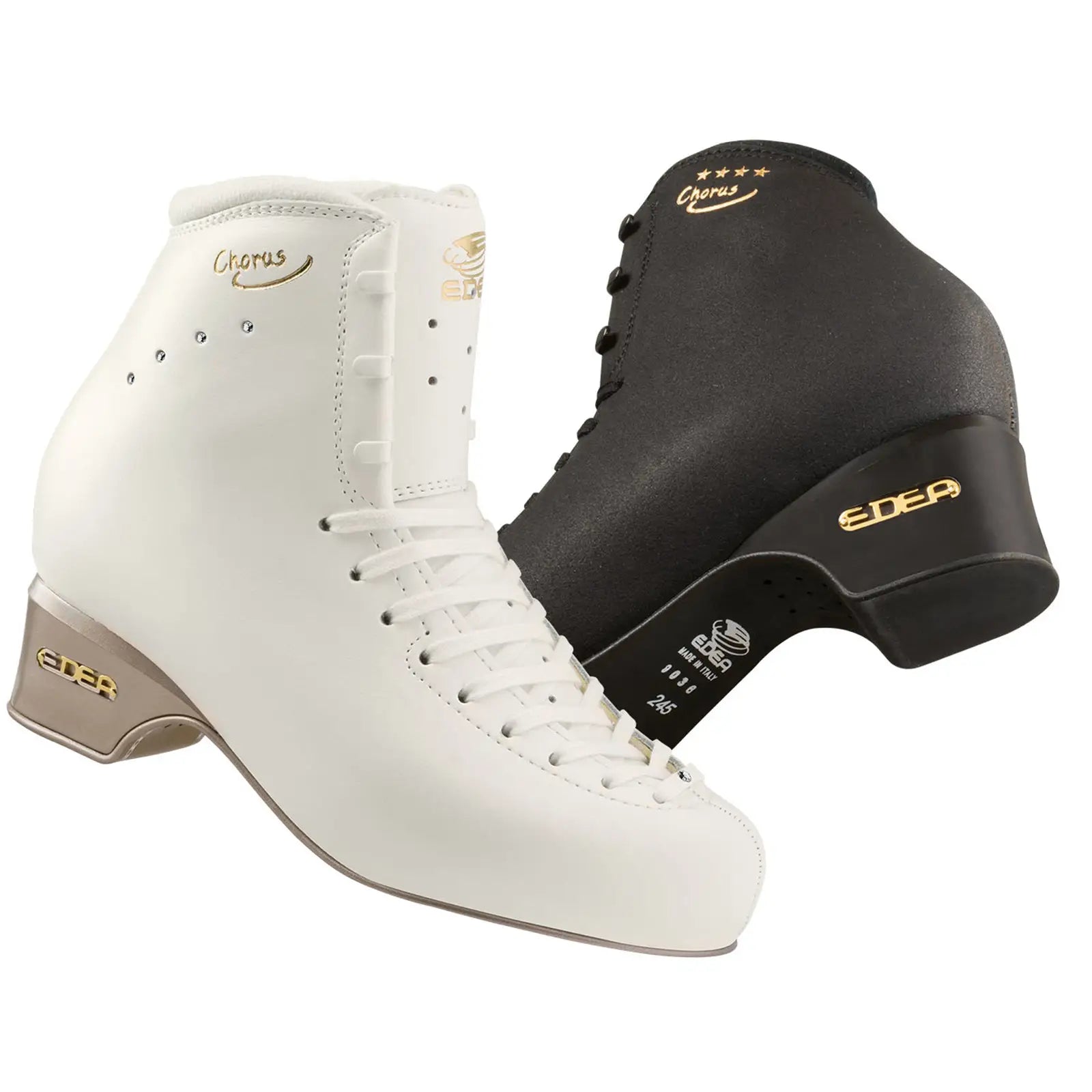
Chorus — Stiffness 75

Concerto — Stiffness 85

Ice Fly — Stiffness 90

Piano — Stiffness 95

Flamenco Ice — Stiffness 85
Jackson

Excel — Support 2–5

Mystique — Support 10–19

Elle — Support 30–35

Freestyle — Support 40–49

Debut — Support 45–55

Premiere — Support 65–69

Supreme — Support 65–95

Synergy Torch — Support 85–95
Step 3: Understand Support Ratings
Both brands publish a number for how much the boot resists bending at the ankle. Higher means more support and impact absorption for bigger jumps, but requires more strength to flex.
- EDEA calls it stiffness and rates from 40 to 95.
- Jackson calls it a Support Rating and rates from 2 to 95, because its range extends much further down into recreational skating.
For a full breakdown of both scales and how to match them to your weight and jump level, see our Understanding Boot Support & Stiffness Ratings guide.
Step 4: Choose Your Material
EDEA
- Waterproof Leather: Used in the Overture, Chorus, Concerto, and Flamenco Ice. Treated to European waterproofing standards (EN ISO 20345), offering a classic look with reliable support.
- Technomicro: Used in the Ice Fly and Piano. EDEA's proprietary composite microfiber is stronger, lighter, and more water-resistant than leather, and completely vegan-friendly. Technomicro boots are 25% to 45% lighter than comparable boots.
Jackson
- Suede leather: The traditional upper on the Supreme line — classic look, proven durability.
- Cut-resistant microfiber: A lightweight synthetic upper used through much of the range, often treated with Dura-guard, a protective microfiber that shields the boot against blade contact.
- Split-leather reinforcement: Alternated with heat-moldable panels, so strength sits exactly where the boot is loaded while the rest still customises to your foot.
Boots in both ranges can be heat molded — EDEA from the Overture up, and Jackson across its intermediate and elite series. The two processes differ; see Heat Molding & Custom Shaping.
Step 5: Get the Right Width
Width matters more than most first-time buyers expect. A correct width does more for control than a stiffer boot will.
| Brand | Widths |
|---|---|
| EDEA | B (narrow) · C (regular) · D (wide) · E (extra wide) |
| Jackson — women's & misses | Regular (A/B) · Wide (C/D) |
| Jackson — men's & boy's | Medium · Wide (C/D) |
If boots have always felt cramped, go wider. If your foot slides laterally even after proper lacing, go narrower. The letters are not a shared system between the brands — an EDEA C and a Jackson Regular are each that brand's standard, not the same measurement. See the Boot Sizing Guide.
Tips for First-Time Buyers
- Check which size run you're ordering from. Jackson's Misses and Boy's runs restart at 1 after 13, so a 13 can be a small youth boot rather than a large one.
- Budget for custom shaping. A professional heat mold takes about 20 to 30 minutes and transforms comfort and performance.
- Plan for blade mounting if you are buying boot-only. See our blade guide and recommended combinations. Complete skates arrive already mounted.
- Replace boots when they break down. If your ankles bend inward over the top of the boot, it is time for a new pair.
Want to be walked through it? Find Your Skate narrows it down in three questions.
Need Help?
Choosing the right equipment can feel overwhelming, but you don't have to figure it out alone. We're real skaters helping real skaters — no pressure, just honest guidance.
Contact Us